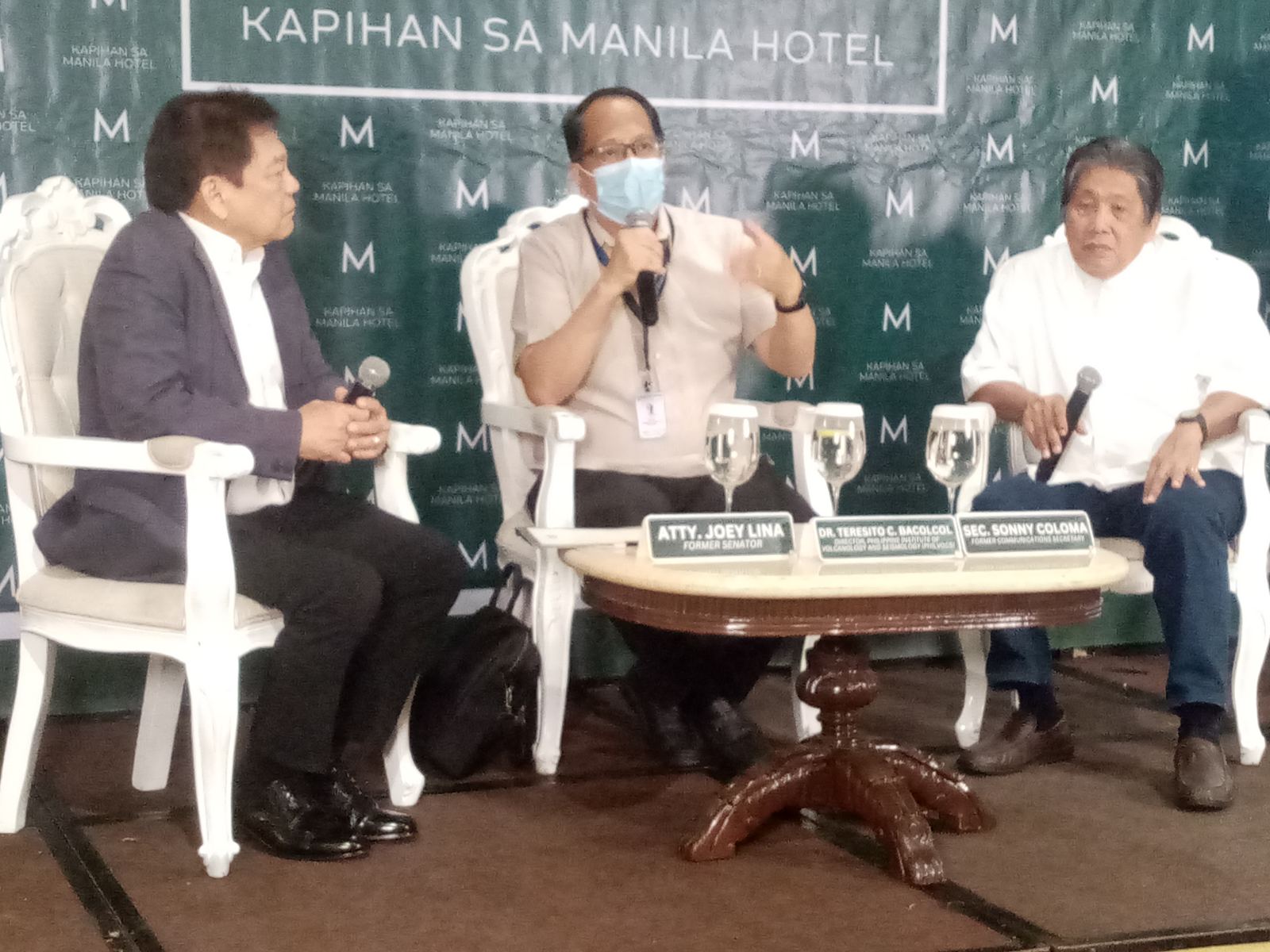
Manila Philippines -Metro Manila is now better equipped to face the predicted magnitude 7.2 earthquake known as “The Big One,” but more work is needed to bring awareness down to the community level, according to the head of the Philippine Institute of Volcanology and Seismology (PHIVOLCS) this June 25,2026 .
Speaking during the Kapihan sa Manila Hotel forum, Dr. Teresito C. Bacolcol, Director of DOST-PHIVOLCS, emphasized that while readiness has improved, information and education campaigns must be intensified to ensure every household understands how to prepare and stay safe.
Tools to Check Safety and Hazards
Bacolcol encouraged the public to use free online resources to assess their homes and surroundings:
– “How Safe is My House?” App & Website – Lets users check if their residence meets standards for earthquake resilience.
– Hazard Hunter – An online platform that shows local risks including ground shaking, liquefaction, and landslides.
“These tools are available to everyone — they help turn awareness into action,” he said.
Constant Seismic Activity
The official noted that the Philippines sits on a highly active tectonic zone, making earthquakes a natural part of its geography.
– On average, around 30 earthquakes occur daily across the country, though most are too weak to be felt.
– In the 24-hour period up to 6:00 AM yesterday, PHIVOLCS recorded 180 earthquakes nationwide — only 5 of which were felt by residents.
Bacolcol added that this activity explains the country’s geological makeup: areas like Baguio and parts of Rizal have limestone formations that were once ancient seabeds, lifted over time by tectonic movements.
LGUs Key to Safety
Local Government Units (LGUs) carry the biggest responsibility in ensuring structures can withstand strong quakes, Bacolcol stressed.
– LGUs must strictly monitor residential buildings and ensure compliance with the National Building Code.
– Building permits and structural inspections should guarantee that structures can endure tremors of up to magnitude 7.2.
“Preparation is not just about equipment — it is about making sure every home, every building, and every community knows what to do before, during, and after a major quake,” Bacolcol said.
Also present during the forum were former Senator Atty. Joey Lina and former Presidential Communications Secretary Sonny Coloma, who both agreed that disaster resilience requires cooperation between government, private sector, and citizens.


3 thoughts on “Metro Manila ‘More Prepared’ for The Big One — PHIVOLCS Chief”