QUEZON CITY — Over 25 weaving communities from across the country are showcasing their authentic handwoven textiles and rich cultural stories at the Philippine Handloom Weaving Festival (PHWF) 2026, bringing heritage craftsmanship closer to the public while advancing the local weaving industry through innovation.
Held from September 18 to 20, 2026, at the Quantum Skyview, Gateway Mall 2, Araneta City, Quezon City, the three-day festival aims to expand the market for Philippine handwoven products and highlight emerging textile technologies that support the growth of the local weaving sector.
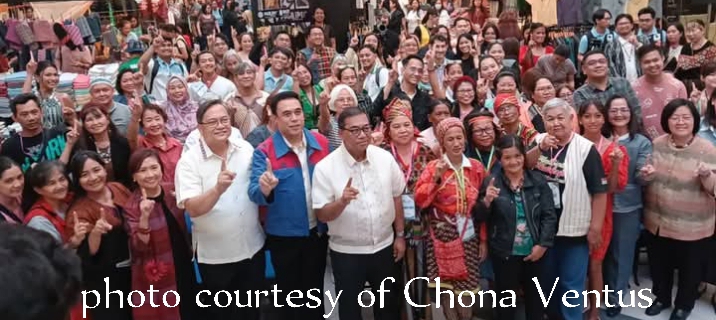
The event was led by DOST Secretary Renato Solidum Jr., alongside PTRI Executive Director Dr. Julius Caesar Sicat, OPARRU Assistant Secretary Susana Marcaida, and Araneta Center Vice President for Leasing Lorna Fabian. It was organized by the Department of Science and Technology – Philippine Textile Research Institute (DOST-PTRI), in partnership with the J. Amado Araneta Foundation (JAAF) and Habing Katutubo, as part of the national Creative Industries Month celebration.
Bridging Heritage and Digital Innovation
Beyond exhibitions of handwoven products, the festival serves as a platform to introduce cutting-edge textile technologies developed by DOST-PTRI — most notably its DigiTEALization Program, which collaborates with weaving communities nationwide to document local textiles, digitize traditional patterns, and establish systems for product authentication and protection.
A key highlight is the SalinHABI Mobile App, which enables weaving communities to document and register their unique weaving patterns, while providing buyers with detailed information on each textile’s origin, materials, and cultural significance. The digital registry also safeguards traditional designs from unauthorized copying and counterfeiting, ensuring proper recognition and livelihood for the communities that preserve these age-old traditions.
Weaving Culture into Economic Growth
The festival underscores the growing contribution of the handwoven textile industry to the country’s creative economy. According to the Philippine Statistics Authority (PSA), the Philippine creative economy grew by 6.9% in 2025, reaching ₱2.12 trillion from ₱1.98 trillion in 2024. Traditional cultural expression activities account for 33% of employment within the creative sector — the largest share of any category.
“For Filipino weavers, every piece of cloth is more than color and pattern — it reflects the history, traditions, and stories of communities that have sustained this craft for generations,” organizers noted.
The festival also features the Hinahi Textile Bazaar, Textile Innovation Exhibition, Textile Exchange and Fora, and technology demonstrations that equip both weavers and the public with tools to protect, promote, and preserve Philippine handwoven heritage.
At its core, PHWF 2026 is a celebration of Filipino ingenuity — one that honors the past while weaving a future where tradition and innovation thrive together.

